
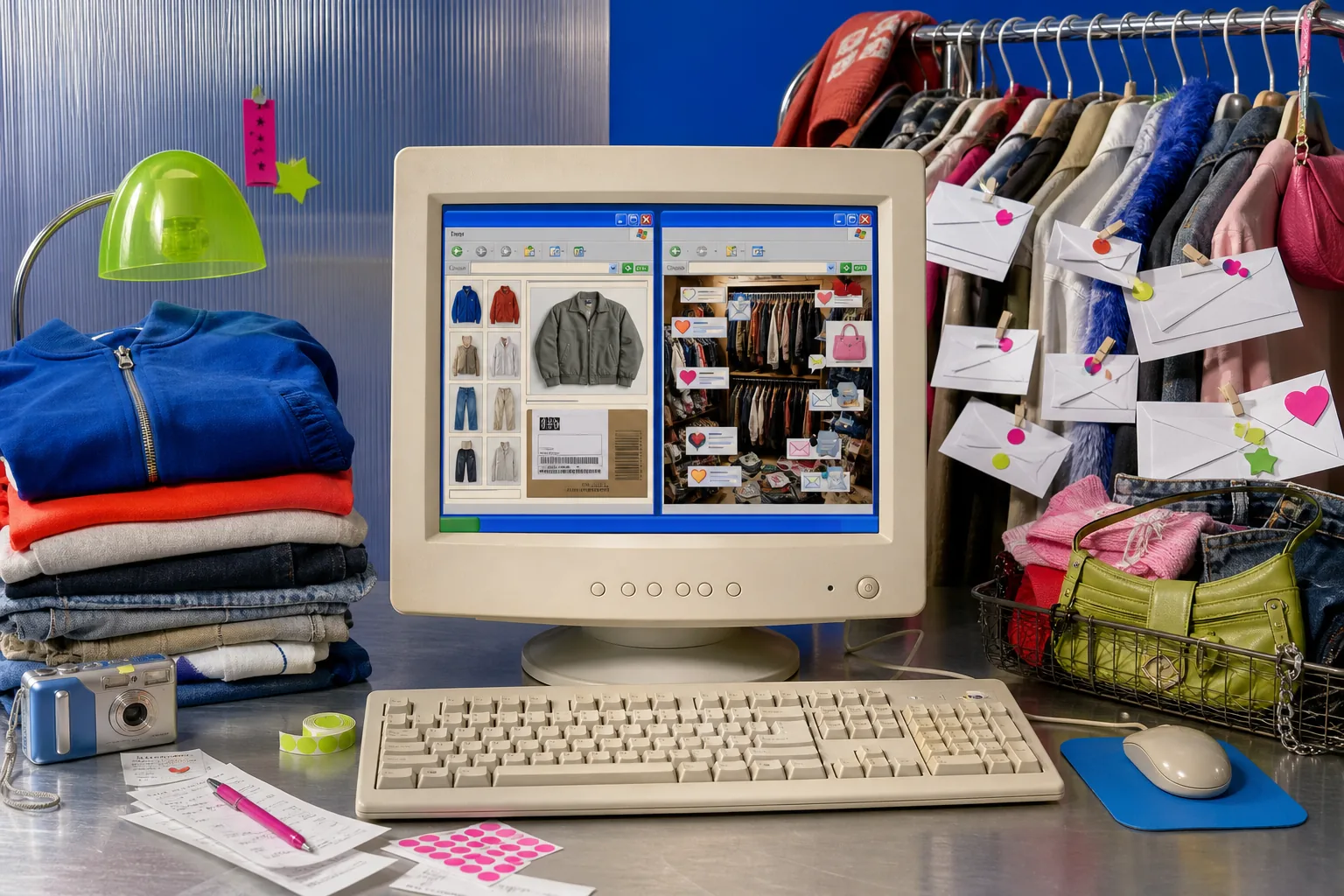
For US sellers, Vinted is the better first test when you care about keeping the full item price, want a simpler listing rhythm, and have everyday clothing that can sell without closet theater. Poshmark is still the stronger machine when you want an established US fashion audience, bundles, familiar offer behavior, and buyers already trained to shop a seller's closet. The blunt version: Vinted gives you more margin per sale; Poshmark gives you more built-in machinery around the sale. Neither matters if your inventory is wrong for the room.
- Choose Vinted for margin, straightforward wardrobe listings, and an early US marketplace you are willing to learn.
- Choose Poshmark for an established buyer pool, bundles, active offers, and inventory that benefits from closet browsing.
- Test both with comparable items before moving hundreds of listings. Marketplace loyalty does not pay storage rent.
The $25 sale explains a lot
Under Poshmark's current US fee policy, a $25 sale carries a 20% seller fee, leaving $20 before any seller-funded discount or other cost. Vinted says selling is free, so the seller receives the item price after a completed sale.
That makes Vinted look automatic until you remember the buyer's screen. Vinted adds shipping and a mandatory Buyer Protection fee at checkout. A seller can keep more and still lose the buyer if the final total makes a basic used top feel expensive. Margin is not demand.
- Poshmark: $2.95 seller fee on sales of $15 or less; 20% above $15 under the current US policy.
- Vinted: no seller fee; Buyer Protection and shipping affect the buyer's total.
- On either app: price from the final experience, not from the number you wish the item were worth.
Poshmark has trained its buyers
Poshmark buyers understand likes, offers, bundles, closet discounts, and the general ceremony around not paying the first number they see. That behavior can be exhausting, but it is also useful: sellers know where negotiation fits.
Vinted US is less settled. Favorites can mean interest, comparison, payday waiting, or absolutely nothing. The upside is that sellers can watch those habits form. The downside is that there is less inherited certainty about what a favorite should turn into.
Which inventory belongs where
Poshmark makes sense for recognizable brands, shoes, handbags, occasion pieces, and closets where bundles can lift the order value. It can also support higher prices when the buyer already trusts the category and the marketplace.
Vinted makes sense for wearable basics, denim, tees, mall brands, lower-priced vintage, and closet-cleanout inventory where a 20% fee would hurt. Because the buyer sees extra costs at checkout, cheap single items still need enough value to survive shipping.
The work feels different
Poshmark can turn selling into a social maintenance routine: offers, bundles, sharing, closet activity, and buyer conversations. Some sellers are good at that. Others slowly discover they have built themselves a part-time job made of notifications.
Vinted puts more pressure back on the listing: cover photo, title, size, condition, price, and response time. It is not work-free. It is simply a different pile of work, with less reason to perform a whole closet identity around every item.
Do not compare random weeks
A useful test needs comparable stock. Pick 20 items in the same broad price band. Split similar brands and categories between the two apps, list within the same week, and answer buyers at the same speed.
Then compare sell-through, net payout, number of offers, time spent per sale, and how often buyers needed clarification. If Poshmark sells more but eats the margin and your evening, that is a result. If Vinted keeps the margin but produces silence, that is also a result.
- Use net payout after marketplace costs.
- Count seller-funded shipping or offer discounts.
- Record minutes spent maintaining each listing.
- Keep a single source of truth for inventory.
Use tools where the repetition actually is
If your Vinted batch starts getting favorites and sales, VintHelper can take care of some of that marketplace-specific repetition: cloud backups, wardrobe review, controlled reposting, favorite messages and offers, Image+ photo work, order workflows, and a seller dashboard.
It will not manage a Poshmark closet or cross-list between the two. That limitation is not hidden fine print; it simply means the tool belongs on the Vinted side while your inventory sheet keeps both marketplaces honest.
FAQ
Is Vinted better than Poshmark for sellers?
Vinted is better for sellers prioritizing margin and simpler wardrobe listings. Poshmark can be better for established demand, bundles, active offer behavior, and branded inventory.
Does Vinted charge seller fees in the US?
Vinted's current US selling guide says there are no fees for selling. Buyers pay shipping and a mandatory Buyer Protection fee at checkout.
What are Poshmark's US seller fees?
Poshmark's current US policy charges $2.95 on sales of $15 or less and 20% on sales above $15. Check the live policy before repricing a whole closet.
Should I move my Poshmark closet to Vinted?
Test a focused batch first. Compare net payout, sell-through, buyer questions, and time spent before moving large amounts of inventory.