
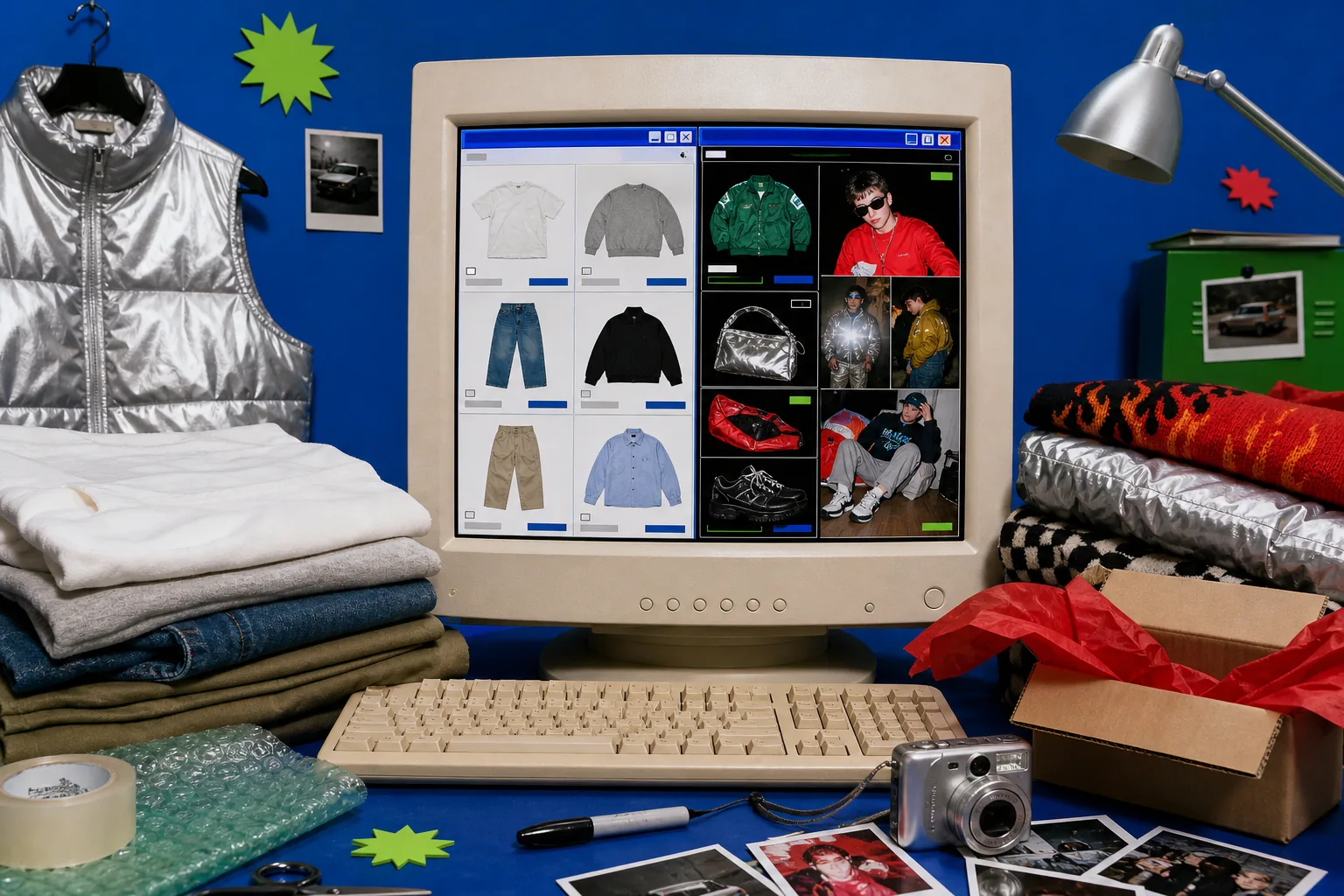
If you sell everyday clothes, mall brands, wearable vintage, or a closet cleanout, I would start with Vinted. If the item needs styling to make sense - a tiny graphic tee, strange denim, archive-looking streetwear, a piece tied to a specific aesthetic - Depop still gives it a better stage. The fee gap is smaller than old comparison posts make it sound: Vinted says selling is free, while US Depop sellers currently pay no Depop selling fee on qualifying listings but do pay payment processing. The real choice is whether your inventory sells as a useful garment or as a look.
- Choose Vinted for straightforward wardrobe inventory, lower seller-side friction, and buyers who can understand the item from one clean photo.
- Choose Depop when styling, curation, and cultural context are part of the price.
- Use both only if you can remove sold stock quickly. A double sale is a terrible way to learn inventory control.
My ten-second rule
Ask one question: would this item still look desirable on a plain hanger? If yes, Vinted has a fair shot. If the item needs the right shoes, the right crop, and a buyer who knows the reference, Depop may do more of the work.
That is not a quality judgment. A reliable Everlane sweater can be a strong Vinted listing and a dead Depop post. A weird mesh top can do the exact opposite. The same seller can have both kinds of inventory in the same bin.
The fee answer, without the stale blog math
Vinted's US help center says there are no fees for selling. The buyer pays shipping and a mandatory Buyer Protection fee at checkout, so the sticker price is not the buyer's final number.
Depop currently charges no Depop selling fee to US sellers on eligible newer listings, but its US payment processing fee is 3.3% plus $0.45. Optional boosted listings can add a much larger fee. In other words: Vinted wins on seller deductions, but not by the dramatic margin claimed in comparisons that still use Depop's old 10% fee.
- Vinted: no seller fee; the buyer sees protection and shipping costs at checkout.
- Depop US: no selling fee on eligible listings; payment processing still applies.
- Depop boosting: optional, and expensive enough that it belongs in your item-level math.
Vinted wants proof. Depop wants a point of view.
A Vinted buyer usually needs the garment to become obvious fast: brand, item type, size, condition, color, and a price that survives the checkout total. Clean front and back photos beat a complicated shoot when the piece itself is ordinary.
Depop can reward stronger art direction because discovery is part of the shopping behavior. That does not mean every listing needs a model and a parking garage. It means the cover image should explain why this particular jacket, skirt, or tee belongs in somebody's outfit.
Where sellers waste time on both
On Vinted, sellers can under-explain vintage sizing because the listing feels simple. On Depop, sellers can over-style a piece and forget to show the tag, flaw, or actual color. Buyers on both apps still want to know what will arrive in the mail.
The other trap is vocabulary soup. Adding coquette, gorpcore, blokecore, Y2K, archive, and rare to one mediocre shirt does not create demand. Use the one style term a buyer would actually type, then describe the garment.
Run a split test before moving the whole closet
Take 12 items: six useful basics and six pieces with a stronger look. List all 12 on one marketplace, then give the other marketplace a comparable 12-item batch. Keep photo quality, price range, and listing week roughly even.
After two weeks, compare useful signals: views, favorites, questions, offers, sale price, and minutes spent per listing. Do not declare a winner because one jacket sold in an hour. You are trying to find where your repeatable inventory behaves better.
- Track net payout, not just sale price.
- Track how much styling and copy each listing needed.
- Note which questions buyers ask before purchasing.
- Remove sold cross-listed items immediately.
Where a Vinted tool starts to earn its tab
Once the Vinted side grows past a tiny experiment, the repeated work becomes the problem: backing up listings, reviewing stale items, sending sensible offers after favorites, and seeing what actually sold.
VintHelper is useful for that Vinted half of the workflow. Dressing+ handles wardrobe scans, backups and listing work; Notifs+ and Auto Mode cover favorite messages and offers; Image+ helps clean up clothing photos; and the dashboard keeps the sales math visible. It is not a Depop tool and it does not cross-list, which is worth knowing before you build a two-market system around it.
FAQ
Is Vinted or Depop better for vintage sellers?
Depop is usually stronger when the vintage item sells through styling, rarity, or a recognizable aesthetic. Vinted can be better for wearable vintage that reads clearly as a garment and is priced for a value-conscious buyer.
Which has lower seller fees, Vinted or Depop?
Vinted currently has no seller fee. US Depop sellers currently have no Depop selling fee on eligible listings, but payment processing and any optional boosting fees still apply.
Should I use the same price on Vinted and Depop?
Not automatically. Work backward from net payout, buyer checkout cost, expected offers, and the amount of listing work each marketplace requires.
Can VintHelper cross-list from Vinted to Depop?
No. VintHelper focuses on Vinted listings, backups, reposting, favorite messages, offers, photos, orders, automation, and seller metrics.